Most people don’t think much about their water softener until something goes wrong. Perhaps the shower glass is covered in mineral spots again, the salt tank is nearly empty, or the system suddenly stops working as expected. It’s one of those household appliances that quietly does its job in the background — until it needs attention.
Modern water treatment equipment is becoming easier to manage, thanks to smarter controls, connected features, and helpful maintenance notifications. These improvements don’t change the basic purpose of a water softener, but they can make it simpler for homeowners to keep the system running properly. And for anyone juggling work, family, and a long list of household chores, a timely reminder can be surprisingly useful.
Why Water Softener Maintenance Matters
Hard water contains dissolved minerals, mainly calcium and magnesium. As water passes through pipes, appliances, and fixtures, these minerals can contribute to scale buildup. Over time, deposits may collect inside kettles, water heaters, showerheads, and other equipment that regularly comes into contact with water.
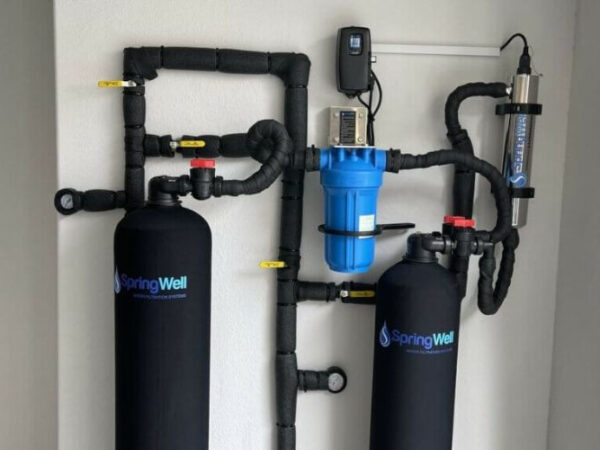
A conventional ion-exchange water softener reduces hardness by passing water through a tank filled with resin beads. The beads capture calcium and magnesium ions and exchange them for sodium or potassium ions. Eventually, the resin needs to be regenerated, usually with a salt solution, so it can continue treating water effectively.
That process is generally straightforward, but it still requires a little attention. Salt levels need checking, regeneration settings must suit household water use, and the system should be serviced according to the manufacturer’s recommendations.
When maintenance gets overlooked, a softener may run out of salt or fail to regenerate correctly. The result can be a gradual return of hard water symptoms, often noticed only after spots and scale start appearing again.
The Move Towards Smarter Water Treatment
Traditional softeners usually rely on programmed schedules or controls that estimate when regeneration is needed. Newer models may include digital monitoring, usage tracking, and connected features that make it easier to understand what the equipment is doing.
Some products offer Wi-Fi enabled technology, allowing users to view system information through a compatible smartphone app or connected interface. Depending on the model, homeowners may be able to check operating status, review water usage, or receive notifications without opening the utility cupboard and inspecting the equipment manually.
For busy households, this can be convenient. Imagine returning from a week away and wanting to check whether the system is operating normally. Instead of guessing, you may be able to review the available status information directly from your phone.
Still, connected features vary considerably between manufacturers. Some systems provide detailed monitoring, while others offer only basic alerts. Before choosing a connected softener, check whether it requires a separate hub, a reliable home internet connection, an ongoing subscription, or a particular smartphone operating system.
Smart technology is useful when it solves a practical problem. It shouldn’t be the only reason to buy a system.
Never Guess When the Salt Is Running Low
Salt is an important part of many conventional water softeners because it helps restore the resin’s ability to remove hardness minerals. Without enough salt, the system may not regenerate as intended, and hard water can begin passing through the treatment unit.
The traditional approach is simple: open the salt tank, look inside, and add more when necessary. There’s nothing wrong with that method, but it’s easy to forget when the softener is tucked away in a basement, garage, or utility room.
Some connected systems provide low salt alerts to notify users when the salt supply needs attention. This can remove one small task from the mental checklist of household maintenance. Rather than discovering an empty tank after water spots return, a homeowner may receive a notification early enough to replenish the supply.
However, an alert doesn’t eliminate the need for occasional physical checks. Salt bridges can form when salt hardens into a crust above the water in the brine tank, creating the appearance of a full tank even when the system cannot draw brine properly. If an alert seems inconsistent with the actual salt level, inspect the tank and consult the product instructions.
Use the salt type recommended by the manufacturer, and avoid filling the tank beyond its specified limit. Simple habits like these help the equipment work as designed.
Service Reminders That Help Prevent Problems
Water softeners contain components that may require periodic inspection, cleaning, or replacement. The schedule depends on the model, the quality of the incoming water, household usage, and the manufacturer’s maintenance guidance.
Some systems include service reminder alerts that notify homeowners when routine attention may be due. Depending on the equipment, reminders might relate to scheduled servicing, system checks, or other maintenance tasks. These notifications can be particularly helpful for households that prefer to follow a planned maintenance schedule rather than wait for a problem to appear.
Of course, a reminder is not the same as a diagnosis. An alert may indicate that a scheduled check is due, but it doesn’t necessarily mean a component has failed. Likewise, the absence of an alert doesn’t guarantee that every part is functioning perfectly.
Pay attention to changes in water quality, unusual noises, visible leaks, or unexpected increases in salt or water consumption. If the softener isn’t producing the expected results, a qualified technician can check the settings, resin performance, valves, and regeneration process.
Choosing the Right Features for Your Home
It’s easy to get caught up in a list of technical features when comparing water treatment systems. A better approach is to begin with your household’s actual needs.
First, establish the hardness level of your water. A water test can help determine whether softening is necessary and provide information for selecting an appropriately sized system. Household size and daily water consumption also matter because they influence how much treatment capacity is needed.
Next, compare operating costs. Consider salt consumption, regeneration frequency, water use, replacement components, and servicing expenses. A connected model may offer helpful monitoring, but the additional features should justify any difference in price.
It’s also worth considering how comfortable you are with technology. Some homeowners enjoy checking performance data on an app, while others would rather have a reliable system with straightforward controls. Neither preference is wrong. The best system is one that fits your home and is easy for you to maintain.
Don’t forget to ask what happens if the internet connection drops. A properly designed system should explain how its core softening functions operate independently of remote monitoring, although the exact behaviour depends on the model.
Smart Features Don’t Replace Basic Care
Connected controls can make maintenance more convenient, but the fundamentals still matter. The system must be sized correctly, programmed for the local water conditions, and maintained according to its instructions.
Keep the brine tank clean when required, monitor salt use, and make sure the drain line and surrounding area remain in good condition. If your household’s water use changes significantly, review the settings rather than assuming the original configuration will remain suitable forever.
Remember, too, that a water softener primarily addresses hardness. It isn’t a universal drinking water purifier and shouldn’t be relied upon to remove bacteria, viruses, or every chemical contaminant. If your water has other quality concerns, testing can help determine whether additional treatment is appropriate.
A More Convenient Way to Manage Water Quality
Smart water softeners are designed to make an already useful household system easier to monitor. Connected status information, salt notifications, and maintenance reminders can help homeowners stay ahead of routine tasks and notice potential issues sooner.
The technology is most valuable when it supports reliable equipment, clear instructions, and sensible maintenance habits. Before buying, compare the actual features offered, understand the running costs, and confirm that the softener is suitable for your water conditions.
A well-maintained system should work quietly in the background, helping reduce hard water scale without demanding constant attention. Add practical monitoring tools where they make sense, and managing household water becomes a little less complicated — which, in a busy home, is a welcome improvement.